Explosion-Proof Lifting: Solutions for Hazardous Manufacturing Environments

Key Takeaways
- “Explosion-proof” electric lifts rely on a containment strategy that can fail due to improper maintenance or seal degradation, posing a hidden risk.
- Pneumatic lifts are intrinsically safe because they use compressed air, completely removing the electrical ignition source from hazardous environments.
- Compared to their electric counterparts, pneumatic systems offer simpler maintenance, higher reliability, and a lower total cost of ownership in volatile settings.
- Industries like automotive, aerospace, pharmaceutical, and food processing depend on pneumatic solutions to mitigate risks from flammable vapors and combustible dust.
- Pneumatic work positioners enhance safety and improve worker ergonomics, reducing injury risk and boosting productivity.
In a hazardous manufacturing environment, the air itself can be a liability. A single spark from a piece of equipment can ignite flammable vapors or combustible dust, leading to a catastrophic event. As an operations manager or production supervisor, ensuring the safety of your team and the integrity of your facility is your highest priority. You’ve likely invested in “explosion-proof” electric lifts and hoists, believing they are the gold standard for safety. But what if that standard isn’t enough?
What if the very concept of an “explosion-proof” electric motor is a mitigation strategy, not a true elimination of risk? This article directly compares the safety and efficiency of so-called explosion-proof electric lifts with their intrinsically safe pneumatic counterparts. We will explore why relying on containment is a flawed strategy and how shifting to air-powered solutions can deliver a superior level of safety, reliability, and ergonomic performance in your most critical environments.
The Hidden Risk: Why “Explosion-Proof” Electric Lifts Fall Short
To understand the risk, we must first revisit the “ignition triangle”: for a fire or explosion to occur, three elements are needed: fuel (like solvent vapors or grain dust), oxygen (present in the air), and an ignition source. In a manufacturing setting, electric material handling equipment is a common and potent source of ignition.
Sparks can be generated from multiple points in an electric lift:
- Motors: Brushes in DC motors and winding faults in AC motors can create arcs.
- Contactors & Switches: The simple act of turning the lift on or off creates a small electrical arc inside the controller.
- Wiring: Damaged or frayed cables can lead to short circuits and sparks.
- Static Discharge: Electrical components can accumulate a static charge that can discharge unexpectedly.
The solution offered by many manufacturers is the “explosion-proof” enclosure. These are ruggedly built housings designed to contain an internal explosion, preventing it from igniting the surrounding atmosphere. However, this approach is based on containment, not prevention. It’s a strategy that carries inherent vulnerabilities. According to OSHA guidelines for hazardous locations, the effectiveness of these enclosures depends entirely on perfect installation and meticulous maintenance. A compromised seal, a loose bolt, or an improper repair can render the entire “explosion-proof” system useless, leaving your facility exposed to the very danger you sought to avoid.
The Pneumatic Alternative: Power Without the Spark
Instead of trying to contain a potential ignition source, a pneumatic lift eliminates it entirely. Pneumatic work positioners operate on a simple, powerful principle: they use compressed air to generate motion. An air compressor, located safely away from the hazardous zone, supplies pressurized air through hoses to a cylinder, which then drives the lifting and positioning action.
The core benefit is elegantly simple: no electricity in the hazardous area means no inherent source of ignition.
This principle is known as intrinsic safety. The equipment is safe by its very design, not because of an added layer of protection. It removes a critical side of the ignition triangle, fundamentally breaking the chain of events that could lead to a disaster. This approach moves you from a state of constant risk mitigation to one of true risk elimination.
Head-to-Head: Pneumatic vs. Electric Lifts in Hazardous Zones
When choosing equipment for a volatile environment, the decision goes beyond the initial purchase price. A true comparison must account for safety, long-term reliability, and operational control.
Safety: Intrinsic Design vs. Containment Strategy
As discussed, pneumatic lifts are intrinsically safe. Their power source is inert compressed air. An explosion-proof electric lift, conversely, operates on a containment strategy. It assumes an explosion could happen inside the motor or enclosure and is built to withstand it. This places immense pressure on maintenance teams to ensure seals and fittings are flawless, a recurring liability that simply doesn’t exist with pneumatic systems.
Maintenance & Reliability
The maintenance demands for explosion-proof electric equipment are rigorous and costly. Enclosures must be periodically inspected and recertified to ensure their integrity. This often requires specialized technicians and significant downtime. Pneumatic systems are mechanically simpler. Maintenance typically involves checking hoses for leaks and servicing air cylinders—tasks your internal team can often handle quickly, leading to greater uptime and a lower total cost of ownership.
Precision & Control
In tasks like positioning a delicate aerospace composite for finishing or carefully lowering a component into a chemical bath, precision is paramount. Pneumatic systems excel here, offering smooth, variable, and highly responsive control over lifting and lowering speeds. The operator has a direct feel for the load, allowing for fine adjustments that are often difficult to achieve with the fixed speed settings and abrupt starts and stops of many electric hoists.
Which Industries Require Pneumatic Lifting Solutions?
While any environment with explosion risk can benefit, several industries rely on pneumatic solutions as a non-negotiable safety standard.
- Automotive & Aerospace: Paint booths and finishing areas are saturated with solvent and chemical vapors. Pneumatic lifts are the standard for positioning vehicle chassis or aircraft components, ensuring a flawless finish without ignition risk.
- Pharmaceutical & Chemical: The processing of fine powders, alcohols, and other volatile compounds creates highly hazardous atmospheres. Pneumatic manipulators are essential for safely lifting and positioning drums, bags, and mixing equipment in these controlled environments.
- Food & Beverage: Many people are surprised to learn that food ingredients can be highly explosive. Combustible dusts from grain, flour, sugar, and spices can ignite with devastating force, a hazard recognized by the NFPA. Pneumatic lifts are critical for safe material handling in mills, bakeries, and processing plants.
More Than Safe: The Ergonomic and Efficiency Benefits of Pneumatic Positioners
Eliminating explosion risk is a powerful justification for pneumatic lifts, but the benefits don’t stop there. At Ergotronix, our mission is to create safer *and* more productive workplaces by reducing worker strain. Pneumatic work positioners are a perfect extension of this philosophy.
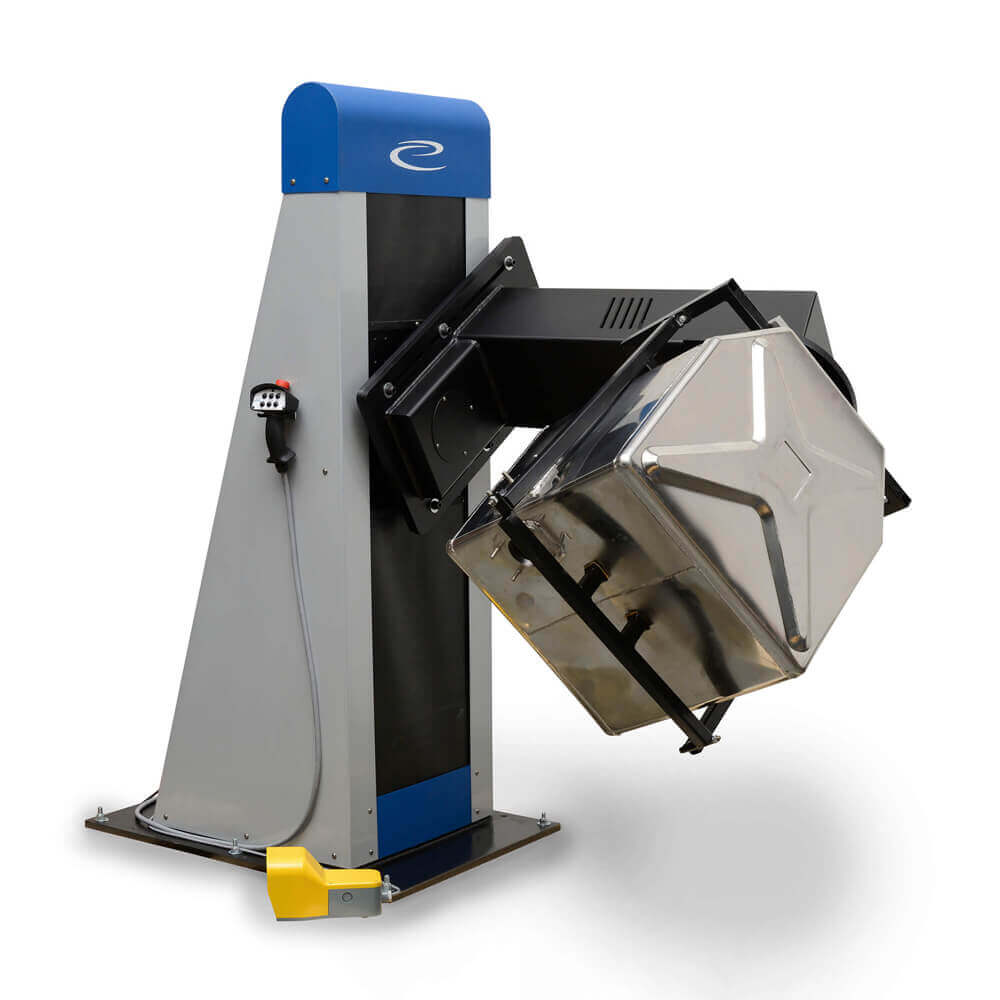
By providing precise, effortless control, solutions like our Ergo Master and Ergo Chief manipulators allow operators to move heavy or awkward loads as if they were an extension of their own hands. This smooth motion significantly reduces the risk of musculoskeletal disorders (MSDs) associated with manual lifting and repetitive tasks. When you combine intrinsic safety with superior ergonomics, you create a dual justification for your investment. You are not only protecting your facility from a catastrophic event but also protecting your employees from career-ending injuries, leading to higher morale, increased productivity, and improved uptime.
Implementing the Right Pneumatic Solution for Your Facility
Making the switch to a safer lifting solution begins with understanding your environment. Facilities are often classified into hazardous location categories (e.g., NEC Class/Division or ATEX zones) based on the type and presence of flammable materials. Identifying these zones is the first step. From there, it’s crucial to partner with an expert who understands that safety and ergonomics are two sides of the same coin. A solution that prevents explosions but is difficult for your team to use is not a complete solution.
At Ergotronix, we specialize in designing pneumatic handling systems that are tailored to your specific application, environment, and ergonomic needs. We don’t just sell equipment; we provide a comprehensive safety and efficiency partnership. Schedule a complimentary safety and ergonomic consultation with an Ergotronix expert today.