How Much Weight Can a Worker Safely Lift on the Job?

Key Takeaways
- OSHA has no standard that limits how much a person can lift. It can cite lifting hazards under the General Duty Clause and points employers to the NIOSH lifting equation.
- The NIOSH equation starts at 51 pounds under ideal conditions and lowers the recommended weight for reach, height, travel distance, twisting, frequency and grip.
- Divide the load by the recommended weight to get the lifting index. NIOSH’s goal is 1.0 or less, and above 3.0 nearly all workers are at increased risk.
- Longer stretches of lifting lower the limit. At two lifts a minute, going from an hour or less to a 2 to 8 hour period cuts the recommended weight by almost 30 percent.
- When a lift fails, NIOSH’s first choice is to take the manual lifting out of the job with equipment, then redesign the task, with team lifting as a stopgap.
There’s no OSHA lifting limit. Federal OSHA has no standard that caps how much one person can lift or carry at work. What it does is point employers to the NIOSH lifting equation, which starts at 51 pounds and lowers that number for every condition that makes a lift harder.
That lower number is the one that matters on the plant floor. A part that’s within the limit when it’s lifted now and then from waist height can turn into a high-risk lift. It only takes a low pallet, a twist to reach the fixture, or a full shift of repeat lifts. Below is how the limit works, how to check your own lifts, and what to do when a lift fails.
Does OSHA have a weight limit for lifting?
No. In a letter of interpretation on safe lifting weights, OSHA says it has no standard that limits how much a person may lift or carry.
That doesn’t put lifting outside of OSHA compliance. OSHA can address heavy lifting and back injury hazards under the General Duty Clause, Section 5(a)(1) of the OSH Act. That clause requires employers to keep the workplace free of recognized hazards that are likely to cause death or serious physical harm. In the same letter, OSHA describes the NIOSH lifting equation as a way to predict the injury risk of a lift and notes that the NIOSH guidance itself is voluntary.
So when someone asks what the OSHA lifting limit is, the practical answer is the NIOSH recommended weight limit for that specific task.
What is the NIOSH lifting equation?
The Revised NIOSH Lifting Equation is a formula from the National Institute for Occupational Safety and Health for evaluating two-handed lifting tasks. The NIOSH Applications Manual defines its two main results:
- Recommended weight limit (RWL). The load that nearly all healthy workers could lift over a substantial part of a shift, up to 8 hours, without an increased risk of lifting-related low back pain.
- Lifting index (LI). The weight of the load divided by the RWL. It shows how far a lift sits above or below the limit.
The equation starts from a load constant of 51 pounds. That’s the recommended weight under ideal conditions:
- Hands no more than 10 inches in front of the ankles
- The load starting at about knuckle height, 30 inches off the floor
- 10 inches or less of vertical travel
- No twisting
- A good grip
- Infrequent lifting with plenty of recovery time
Real jobs rarely look like that, so the equation multiplies the 51 pounds by six factors. Each factor is 1.0 under ideal conditions and drops as the task gets harder.
The equation is used well beyond NIOSH. According to the manual, it’s the basis for the international standard ISO 11228-1 and for ergonomic guidelines from the Automotive Industry Action Group and SAE. Certified professional ergonomists also recognize it as an effective risk assessment tool.
The six factors that lower the recommended weight
Each factor comes from a measurement you can take at the station. Here’s what each one measures and how much it can lower the limit, using the multipliers in the NIOSH manual:
- Horizontal distance. How far the hands are in front of the ankles. Up to 10 inches, there’s no reduction. At 20 inches the multiplier is 0.50, which cuts the recommended weight in half. Past 25 inches, it drops to zero.
- Vertical height. Where the hands are at the start of the lift. The best height is 30 inches. At floor level the multiplier is 0.78, and above 70 inches the recommended weight is zero.
- Travel distance. How far the load moves up or down. A 70-inch move lowers the limit by 15 percent compared with a move of 10 inches or less.
- Twisting. How far the load sits to the side of the body’s front at the start or end of the lift. A 90-degree twist lowers the limit by 29 percent, and past 135 degrees the recommended weight is zero.
- Frequency and duration. How often the lift happens and how long the lifting goes on. This is the factor that changes most with the workload, as the section on long shifts below shows.
- Grip. How well the hands can hold the load. Good handles leave the limit alone. A poor grip, such as a bulky part with nothing to hold on to, lowers it by 10 percent.
The full equation is RWL = 51 × horizontal × vertical × distance × twisting × frequency × grip multipliers. One poor factor can push a lift over the limit, and several moderate ones multiply together.
How to read the lifting index
Divide the weight of the load by the recommended weight limit, then compare the result with NIOSH’s guidance:
- 1.0 or less. NIOSH’s goal for every lifting job.
- Above 1.0. NIOSH considers the task likely to raise the risk of lifting-related low back pain for some part of the workforce.
- Above 3.0. Experts cited in the NIOSH manual agree that nearly all workers would be at increased risk of injury.
The index also tells you where to start. The higher the number, the smaller the share of workers who can handle the task safely, so rank your lifts and fix the highest ones first. For jobs that mix several different lifts, NIOSH uses a composite lifting index, and its free NLE Calc app calculates both.
What the numbers look like on real jobs
The NIOSH manual works through ten examples. Two of them look a lot like everyday manufacturing work.
Loading a 44-pound reel into a punch press
Once a shift, a press operator lifts a 44-pound reel of stock from the floor onto the machine. The reel is too awkward to hold close, and it has to be placed carefully at the machine. The recommended weight works out to 16.3 pounds at the start of the lift and 14.5 pounds at the machine, for a lifting index of 2.7 and 3.0. NIOSH calls the lift hazardous for a majority of healthy industrial workers, even though it happens once per shift.
Loading the machine from the side, with the reel turned so the operator could hold it closer, brought the index down to 1.3 and 1.8, which is still above 1.0. One of the fixes NIOSH lists is bringing the reel to the machine on a mobile mechanical lifting device so no one lifts it by hand.
Packing a 25-pound product all shift
A 25-pound product arrives once a minute, and the worker twists 90 degrees to pick it up, over a normal 8-hour shift with regular breaks. The recommended weight is 16.4 pounds, which puts the lifting index at about 1.5.
Both loads are under 51 pounds, and both fail once the real conditions go into the equation.
Why long shifts and peak season lower the limit
Frequency and duration change the most during busy periods, when order volume rises and people lift more often for longer stretches. NIOSH sorts lifting time into three bands: up to 1 hour, 1 to 2 hours, and 2 to 8 hours. The shorter bands only apply when enough recovery time follows the lifting. Here’s what that does to a lift done twice a minute, using the NIOSH frequency table:
- Up to 1 hour: multiplier of 0.91
- 1 to 2 hours: multiplier of 0.84
- 2 to 8 hours: multiplier of 0.65
The part, the station and the worker are the same, and the recommended weight drops by almost 30 percent between the first band and the last. Two more points matter during overtime. NIOSH provides no weight limits for lifting beyond 8 hours. And at high lift rates the multiplier falls to zero: for lifts that start below 30 inches, nine lifts a minute over a 2-to-8-hour period gives a recommended weight of zero.
If a job only stays under the limit with short lifting sessions and long breaks, a busy season can push it over.
What the NIOSH lifting equation doesn’t cover
The equation was built for two-handed lifting and lowering. NIOSH says it doesn’t apply to:
- One-handed lifting
- Lifting for more than 8 hours
- Lifting while seated or kneeling, or in a restricted work space
- Unstable loads, such as partly filled containers of liquid
- Lifting combined with significant carrying, pushing or pulling
- Fast lifts of about 30 inches per second or more
- Slippery floors, or temperature and humidity outside roughly 66 to 79°F and 35 to 50 percent relative humidity
Those tasks can still hurt people. They need a broader ergonomic evaluation, and they belong on the same list as the other ergonomic hazards in your plant.
When a lift fails, change the task
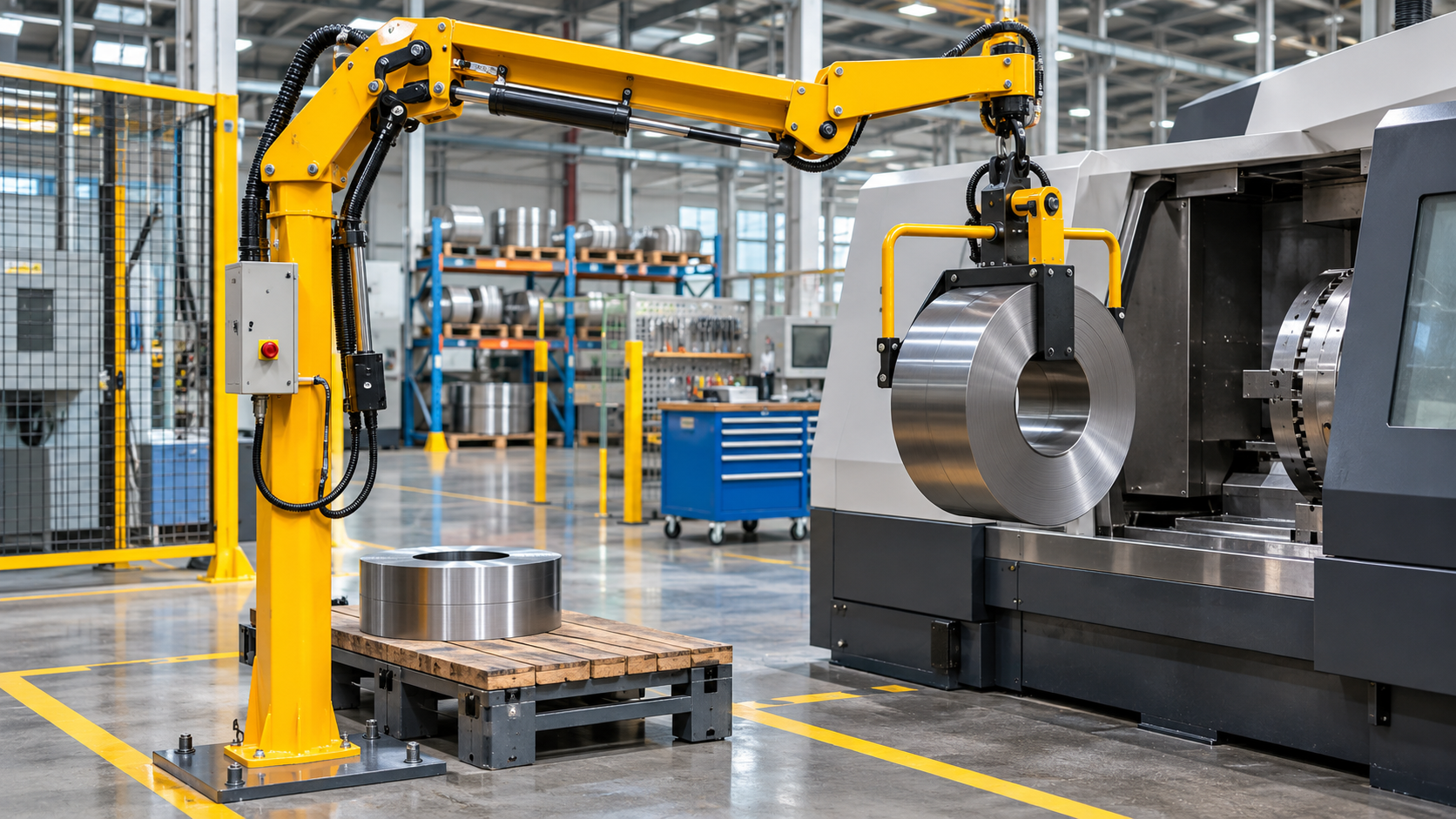
NIOSH lays out an order of fixes. First, take the manual lifting out of the job with equipment such as hoists, manipulators, conveyors or lift trucks. If that isn’t practical, redesign the task by changing heights, distances, frequency or the load itself. Assigning two or more people to the lift comes last, as a stopgap when nothing else is feasible.
The equation also points to the right fix, because the smallest multiplier marks the biggest problem:
- Lifts from the floor or overhead. Bring the work to the right height. Telescopic lift columns raise and lower loads and work surfaces.
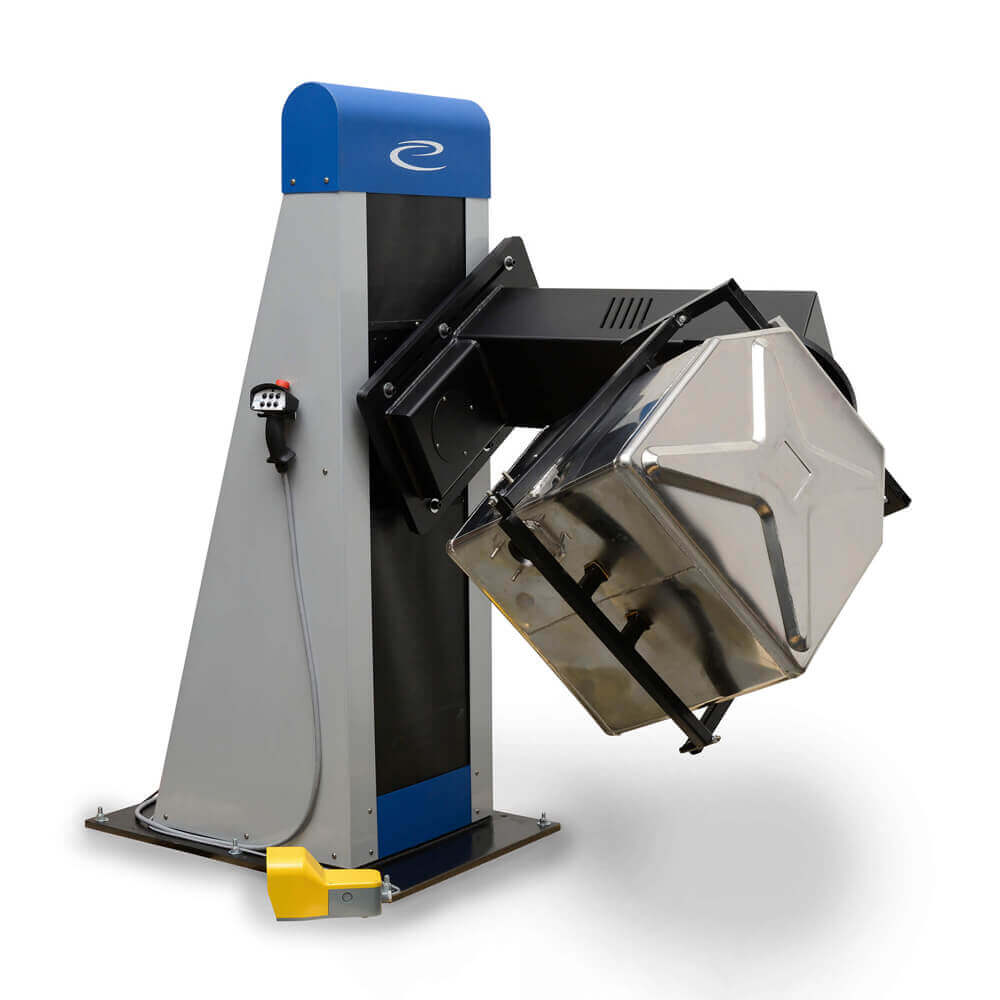
- Long reaches and awkward angles. Hold the part where the work happens. A work positioner holds the part at working height and turns or tilts it, so the operator works on the part instead of lifting it.
- Twisting at a transfer point. Let the load roll instead. Multi-directional conveyor rollers let operators push and turn a load in any direction without picking it up.
- Too many lifts. Cut the number of manual lifts. A lift transporter picks up a load and carries it to the next station.
These are engineering controls, and they work on every shift without relying on anyone’s technique. Training and back belts don’t change any of the six factors, so they can’t fix a lift that fails the equation. NIOSH makes the same point about job design: it shouldn’t depend on worker compliance.
Equipment also changes who can do the job. When the machine carries the weight, the task stops depending on the operator’s strength, and experienced people can keep doing the work they know.
Start with your heaviest, most frequent lifts
Pick the lifts that worry you most: heavy parts, floor-level picks, twisting transfers, and anything that runs all shift. Measure the six factors, run them through the NLE Calc app, and rank the results. Anything above 1.0 is a candidate for a fix, and anything above 3.0 goes to the top of the list.
If cost is the issue, grants and tax breaks can cover part of it, and our guide to ergonomic lift equipment ROI walks through the business case. Good ergonomics is good economics.
Start making your factory safer. Schedule a consultation and send us the part weight, the starting and ending heights, and how often the lift happens. We’ll help you find the equipment that takes the lift out of the job.