Calculating Ergonomic Lift Equipment ROI for Your CFO

Key Takeaways
- To get budget approval, frame ergonomic equipment as a strategic investment with a measurable financial return, not just a safety expense.
- Leverage the well-established OSHA statistic that safety investments can yield a 4x-6x return as a powerful starting point for your proposal.
- Go beyond the sticker price to include installation, training, and maintenance for a more credible and comprehensive investment analysis.
- Calculate financial gains from three key areas: direct cost savings (insurance), cost avoidance (prevented injuries), and productivity gains (cycle time, quality).
- Include “soft” benefits like improved employee retention and morale, linking them to real-world financial impacts like reduced hiring and training costs.
You see the daily reality on the factory floor. An operator strains to manually lift a heavy component, another twists awkwardly to position a part for assembly. You know there’s a better, safer way. You’ve identified the perfect ergonomic lifting devices to solve the problem, but you’re facing the real hurdle: convincing your Chief Financial Officer. A CFO doesn’t see a strained back; they see line items, capital expenditures, and operational costs. To get buy-in, you need to speak their language. You need to prove, in black and white, that ergonomic equipment isn’t an expense—it’s a high-yield investment.
This guide provides a practical, CFO-ready framework to move your proposal from a “safety initiative” to a “strategic investment.” We’ll deconstruct the famous 6-to-1 return on investment statistic and give you a step-by-step method to calculate the specific ROI of ergonomic lifting devices for your facility.
The $6 Return on Investment: More Than Just a Safety Statistic
You have likely heard the widely cited statistic from the Occupational Safety and Health Administration (OSHA) that for every $1 invested in safety programs, companies can see a $4 to $6 return. This isn’t just a catchy phrase; it’s a benchmark derived from decades of data on the real costs of workplace injuries. According to one survey, over 60% of CFOs report that $1 invested in injury prevention returns $2 or more, validating the principle that safety pays.
Why is this metric so powerful? Because it shifts the conversation from an abstract “benefit” to a concrete financial outcome. However, a CFO won’t approve a major capital expense based on a national average. They need to see *your* numbers. This 6-to-1 figure is your starting point, the hook that gets their attention. The rest of your business case will prove it with your facility’s own data.
Step 1: Calculating the “I” in ROI – The Total Investment
To build a credible case, you must present a transparent and comprehensive view of the investment. This goes beyond the sticker price of the equipment and calculates the Total Cost of Ownership (TCO). A thorough CFO will appreciate this level of detail.
Your “I” should include:
- Equipment Cost: The purchase price of the ergonomic lifting devices, such as a fleet of Ergo Chief® motorized work positioners.
- Installation & Integration: Costs associated with integrating the equipment into your existing production line, including any necessary facility modifications.
- Training: The man-hours and resources required to train employees on the safe and efficient operation of the new equipment.
- Initial Maintenance & Spares: Any recommended initial maintenance costs or spare parts packages.
By presenting a complete TCO, you demonstrate foresight and financial diligence, building trust in your proposal from the very first step.
Step 2: Calculating the “R” in ROI – Quantifying Your Financial Return
This is where your business case truly takes shape. The “Return” is a combination of direct savings, avoided costs, and measurable productivity gains. Let’s break it down into CFO-friendly categories.
Direct Cost Savings
These are the most straightforward savings to calculate. The primary figure here is the reduction in workers’ compensation insurance premiums. Work with your insurance provider to get an estimate of how your premium could decrease by demonstrably reducing risks associated with musculoskeletal disorders (MSDs).
Cost Avoidance
This is the most significant part of your return. Every injury you prevent is a direct cost you avoid. According to the National Safety Council, the average cost of a medically consulted workplace injury is $44,000.
To calculate this, analyze your company’s injury logs for the past 3-5 years. How many MSDs related to lifting and manual material handling occurred? Multiply that number by the average cost per incident to find your historical cost. Your “Return” is the portion of this cost you can realistically prevent with new ergonomic lifting devices.
Productivity & Quality Gains
Ergonomics is not just about safety; it’s about efficiency. When workers are less fatigued and can move parts more easily, they work faster and produce higher-quality work.
- Measure Cycle Time: Compare the time it takes to complete a task manually versus with an ergonomic lift like the Ergo Master®. Shaving even a few seconds off a repetitive task adds up to hundreds of saved hours per year.
- Quantify Throughput: Increased cycle speed directly translates to higher throughput and production capacity.
- Track Quality: Worker fatigue is a leading cause of errors, rework, and scrap. By reducing physical strain, ergonomic equipment leads to more consistent quality. Track your scrap rates before and after implementation to quantify this improvement. [INTERNAL LINK: Related Product, Service, or Blog Post]
The Ergotronix ROI Framework: A Step-by-Step Calculation
Now, let’s put it all together using the standard ROI formula that every CFO knows:
ROI = (Financial Gain – Investment Cost) / Investment Cost
Let’s walk through a hypothetical case study.
Case Study: How a Chicago Automotive Plant Justified an Ergo Control® System
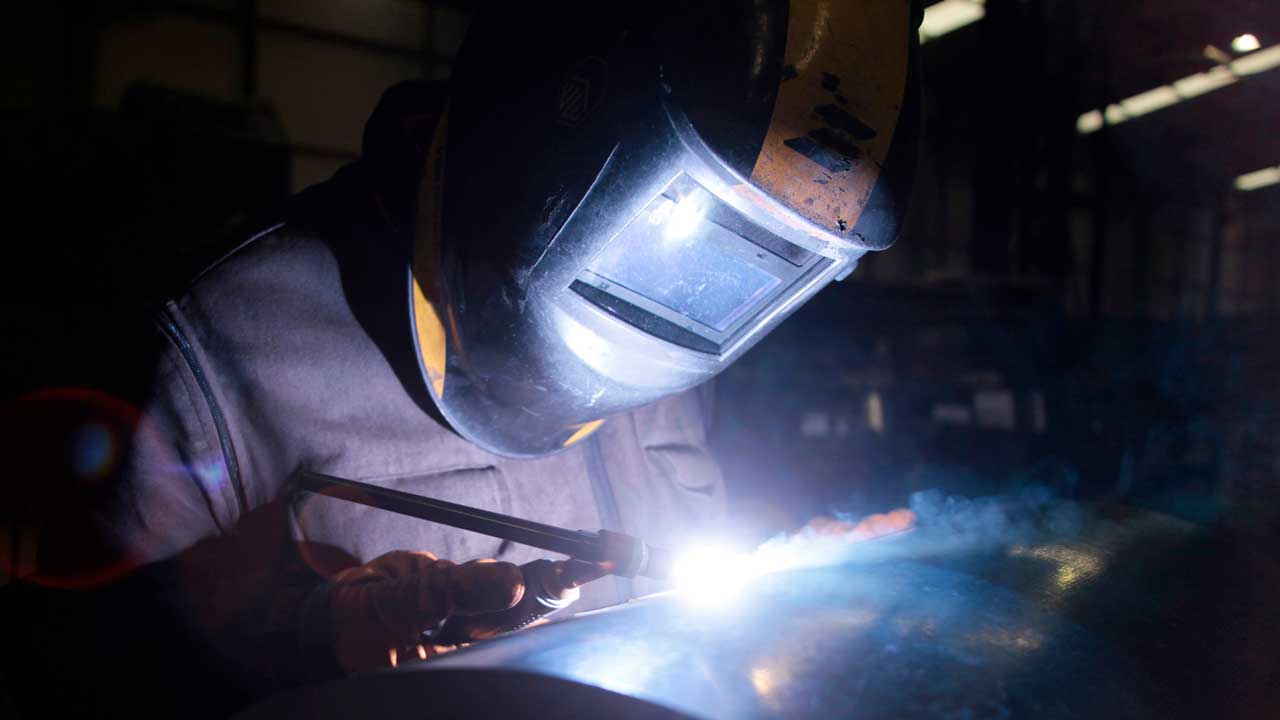
A mid-sized plant was experiencing two significant MSD injuries per year in its welding department, where heavy sub-assemblies were manually positioned.
The Investment (I):
- Four Ergo Control® ergonomic work positioners: $120,000
- Installation & Training: $10,000
- Total Investment Cost: $130,000
The Financial Gain (R) – Annual:
- Cost Avoidance: Preventing two MSDs at an average of $44,000 each = $88,000
- Direct Savings: Estimated 15% reduction in workers’ comp premiums = $20,000
- Productivity Gain: The Ergo Control® system reduced cycle time by 10 seconds per part. Over two shifts, this translated to an annual productivity value of $45,000.
- Total Annual Financial Gain: $153,000
The Calculation:
- ROI = ($153,000 – $130,000) / $130,000
- ROI = $23,000 / $130,000 = 0.177
- Annual ROI = 17.7%
The payback period for this investment is just over one year, and over a 5-year period, the investment delivers a return of nearly $6 for every $1 spent, validating the OSHA benchmark with facility-specific data.
Beyond the Numbers: Presenting the “Soft” ROI to Your CFO
Not every benefit fits neatly into a spreadsheet, but these “soft” returns have a tangible impact on the bottom line. Frame them as strategic advantages:
- Improved Employee Morale & Retention: A safer workplace is a more attractive workplace. Reducing physical strain can significantly lower employee turnover, saving thousands in recruitment and training costs for skilled labor.
- Becoming an Employer of Choice: Investing in employee well-being enhances your company’s reputation, making it easier to attract and retain top talent in a competitive labor market.
- Enhanced Operational Flexibility: Ergonomic lifting devices like those from Ergotronix are often adaptable, allowing you to future-proof your production line for new products and processes.
Building Your Business Case for an Ergotronix Solution
You are the expert on your production floor. This framework is your tool to translate that expertise into a financial argument that resonates with decision-makers. Start by gathering your data—injury logs, insurance premiums, and cycle times. Align your proposal with broader company goals, such as operational excellence initiatives or ESG (Environmental, Social, and Governance) commitments.
An investment in ergonomic lifting devices is a direct investment in your company’s productivity, resilience, and profitability. With a clear, data-driven business case, you can secure the equipment you need to protect your people and strengthen your bottom line.
Ready to build your business case?
- Request a free consultation with an Ergotronix specialist to analyze your specific application and quantify your potential return.
- Explore our case studies to see how companies like yours have achieved significant ROI with our solutions.